By Melissa Weddell and Kara Grau
Montana’s tourism sector showed resilience in 2025, continuing a decade-long trajectory of gradual growth. This period has been defined by a pandemic-induced downturn, followed by a rapid recovery and record-breaking visitation in 2024 and 2025, signaling what could be a new era of heightened demand. The 2025 data paint a picture of stability rather than a surge. Lodging tax collections, airport arrivals, and visits to Glacier and Yellowstone National Parks have all posted modest increases.
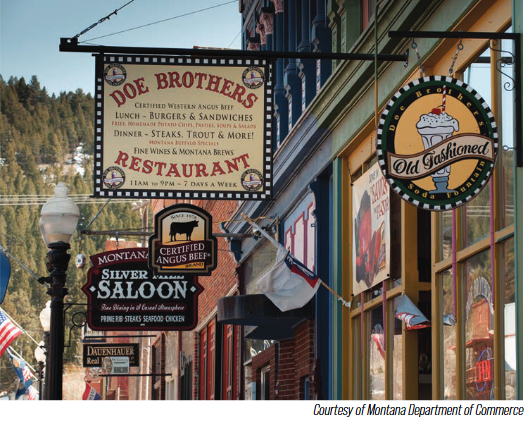
Domestic travel remained strong overall, but the story is uneven: gateway communities near national parks continue to maintain steady visitation, while other areas have seen declines.
The most significant headwinds come from international travel. Canadian border crossings were down 17% year-to-date (as of November 2025) and nearly 24% in the third quarter of 2025. Several ports report steep drops, driven by reduced operating hours, geographic isolation, and lower commercial and agricultural traffic. These trends mirror broader global shifts, including economic caution, evolving traveler preferences, and changing patterns in international visitation.
A recent survey by the Institute for Tourism and Recreation Research of more than 100 tourism-related businesses – including lodging providers, restaurants, outdoor retailers, outfitters and guides, tour operators, and casinos – reveals a noticeable cooling in visitor activity and business confidence heading into 2026. Only 31% of businesses reported increased visitor volume in 2025 compared to 43% in 2024, while those experiencing declines rose sharply from 27% to 44%. Fewer businesses maintained stable visitor numbers as well, suggesting growing variability in demand. This shift in actual performance is echoed in the business outlook: although 81% expect customer volume to increase or remain steady in 2025, this marks a decline from 87% last year, with 44% anticipating no change at all. Taken together, these findings point to a softening tourism outlook, marked by tempered optimism and expectations of stabilization rather than continued rapid growth.
Growth opportunities also stem from major regional
developments, upcoming historic anniversaries,
and travelers seeking authentic,
high-quality experiences
closer to home.
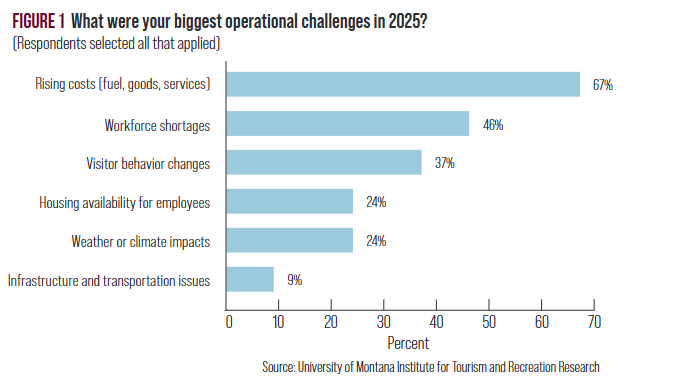
Tourism businesses in the survey reported a mix of shifting visitor patterns and persistent operational pressures. Many reported fewer international and Canadian travelers, more local or regional visitors, and increasingly budget-conscious behavior, with some noting older, more affluent visitors or a rise in group travel and demand for personalized experiences. These changes contributed to broader challenges captured in the survey: 67% of operators cited rising costs for fuel, goods, and services as their biggest operational hurdle, followed by workforce shortages (46%), visitor behavior changes (37%), and employee housing constraints (24%). Additional pressures included weather and climate impacts (24%) and infrastructure or transportation issues (9%). Together, these trends show that businesses are navigating both evolving traveler expectations and structural strains that affect day-to-day operations.
The sales tax debate
As property taxes climb and economic pressures intensify, the statewide sales tax has resurfaced as a major topic of debate in Montana. While the state has no general sales tax, it does impose taxes specifically on overnight lodging: a 4% Lodging Facility Use Tax established in 1987 and a 4% Lodging Sales Tax enacted in 2003 and updated in 2019. Together, these create an 8% statewide tax on lodging. Additionally, 10 communities have adopted local resort taxes, typically 1% to 3%, that apply to lodging, dining, bars, and certain retail sales in high-visitor areas. These local and statewide lodging taxes help support tourism promotion, infrastructure, emergency services, public facilities, and other community needs in destinations most impacted by visitor use.
Survey responses reveal mixed feelings among Montana’s tourism businesses when asked about a potential statewide sales tax. Many see benefits, such as capturing more revenue from visitors and easing property tax pressure, while others raise concerns about regressive impacts on low-income residents, added burdens on small businesses, and uncertainty over how new revenue would be allocated. Local option, or targeted taxes, emerged as preferred alternatives, with respondents emphasizing the need for transparent revenue use and clear communication from government. When it comes to tourism impacts if a statewide sales tax were implemented, opinions were sharply divided: 45% expected a negative effect, 44% anticipated no impact, and 10% believed it would be positive. Those expecting downsides cite reduced spending or shorter trips among budget-conscious travelers and possible declines among visitors who currently come to Montana to avoid sales tax. While others argue most travelers are accustomed to sales taxes elsewhere and would continue visiting regardless. Respondents agreed that the ultimate impact would hinge on the tax rate and how it aligns with existing lodging, resort, and local taxes. Overall, businesses emphasized careful policy design and transparent revenue use would be necessary if implemented.
2026 Outlook
The year ahead looks cautiously optimistic for Montana’s tourism industry but tempered by signs of a softening market as economic conditions tighten. Rising costs, inflation, and shifting traveler spending patterns present challenges, compounded by declines in international and Canadian visitation. Additional uncertainty, ranging from federal policy changes and potential government shutdowns to pressures on public lands and environmental threats such as wildfire, drought, and climate disruptions, adds further volatility. Local challenges, including workforce shortages, limited housing, aging infrastructure, increasing competition, and constrained marketing resources, continue to affect business resilience. At the same time, demand for Montana’s core strengths remains strong. Steady domestic travel, solid lodging tax performance, and continued interest in outdoor recreation, agritourism, and national park experiences provide ongoing stability. Growth opportunities also stem from major regional developments, upcoming historic anniversaries, and travelers seeking authentic, high-quality experiences closer to home. Overall, 2026 will be a year of modest, uneven growth, with domestic travelers helping stabilize the market, while performance will vary by destination type, pricing, and the ability of communities and businesses to adapt to shifting travel behaviors.
Melissa Weddell is director and research faculty at the Institute for Tourism and Recreation Research at the University of Montana.
Kara Grau also works at ITRR as assistant director of economic analysis.