
By Brietta Russell
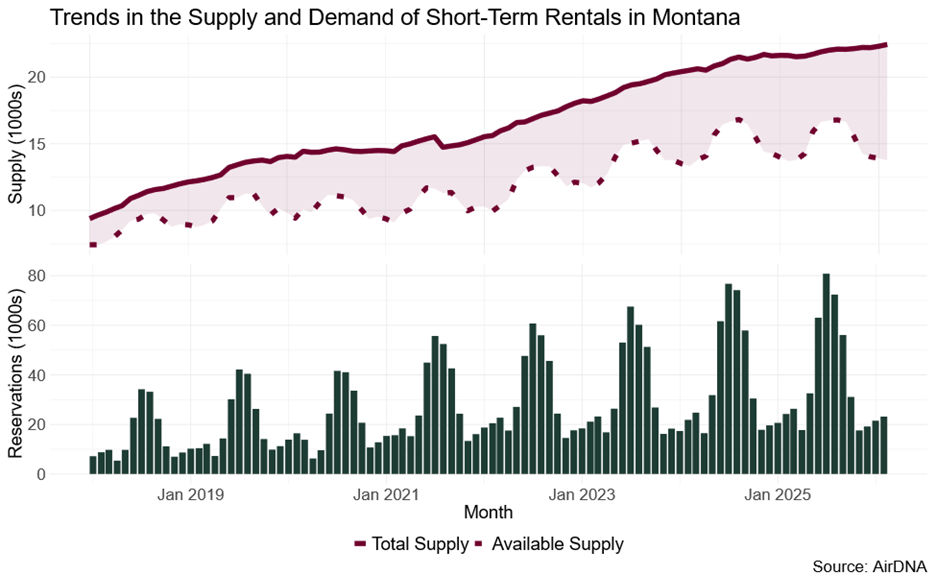
The short-term rental (STR) market in Montana has experienced impressive growth following the Covid pandemic. As travelers sought out low-density and high-amenity destinations, Montana homeowners responded to the surge in tourism by engaging in the STR market. Between December 2019 and December 2022, the total number of STRs listed on Airbnb or Vrbo increased from 14,000 to 18,000, and annual reservations in Montana increased from 245,000 to 373,000. However, growth in the market has begun to slow down. Rising home ownership costs, new property tax policies, and changing regulatory environments could play a role.
After three years of strong growth, the total supply of STRs has settled as fewer properties entered the market and more existing properties left. Growth in supply remained positive, but not all properties were available to be booked during each month. Hosts might block their listing’s availability for several reasons, often related to the primary use of the property. For instance, a dedicated vacation rental is more likely to be available than an additional living space in one’s home. Because of this, many listings become available in response to anticipated demand. The gap between total and available supply fluctuates with demand and has widened throughout the years, seen below.
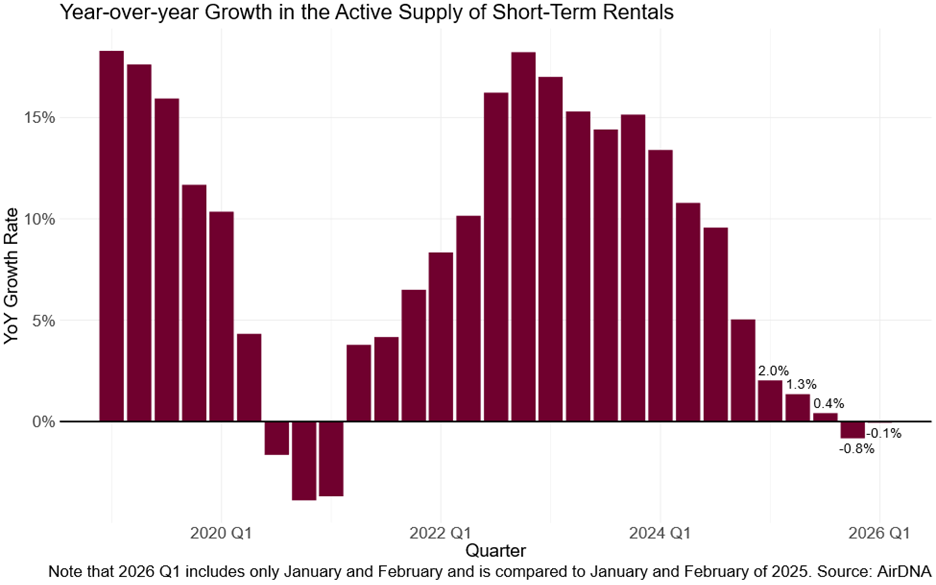
Year-over-year growth in available listings peaked at 18% in late 2022 and has since tapered off, as shown in the chart below. For the past five quarters, growth remained at or below 2%, and available supply declined in Q4 of 2025 for the first time since early 2021. This reduction could be capturing an anticipatory response to recent property tax legislation. The new statewide tax code took effect in 2026 and imposes a higher tax rate on properties not categorized as a primary residence or long-term rental. For some short-term rentals, the new tax rates will result in notable increases in their ownership costs.
It’s difficult to predict whether this trend will continue. Households with second homes may enter the short-term rental market to offset higher property tax bills. At the same time, existing short-term rentals could substitute toward the long-term rental market in pursuit of tax relief. Regulatory environments have also shifted – many cities have proposed or enacted STR regulations to limit the presence of dedicated vacation rentals. As local regulations and the new tax policy continue to evolve, we can expect to see changes in the composition of short-term rental supply.