By Jeffrey Michael
When gas prices rise suddenly, consumers are negatively impacted while some producers benefit. Starting in March, gasoline prices have steeply increased as a result of rising global oil prices since the onset of the war with Iran. Montanans spend a lot of money on gasoline and diesel as geography and lifestyle requires us to travel longer distances and drive larger vehicles. In fact, the most recent data on consumer expenditures show that Montanans spend 27% more per capita than the average American on motor vehicle fuels.
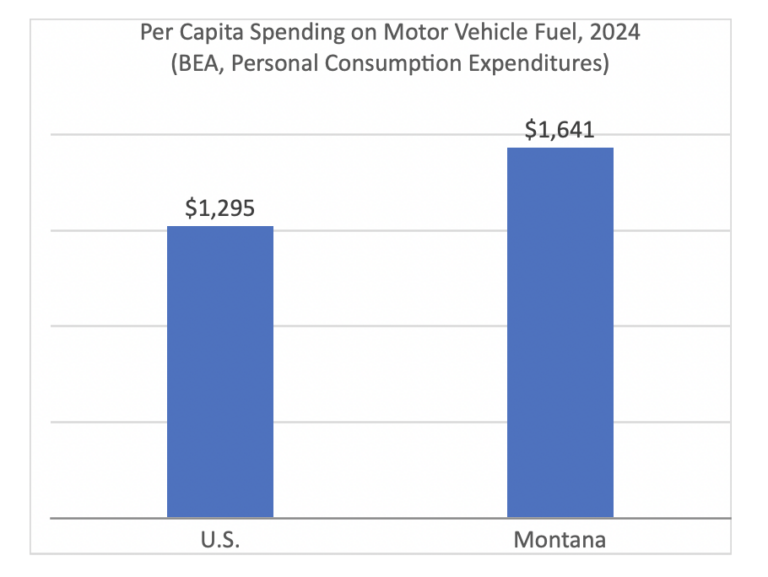
In 2024, regular gas prices averaged $3.30 per gallon nationwide. The current average is just over $4 per gallon. If fuel prices stay near their current level for the rest of the year, Montanans would spend about $2,000 per capita on fuel in 2026, about $350 more than they did in 2024. Larger households and those who drive more could see thousands of dollars in additional costs. In the near term, it may feel as if the increase is even larger as average gas prices were $3 or below this winter before the recent increase following the Iran War and disruption of oil shipments from the Persian Gulf. These fuel costs will also impact key Montana industries like agriculture – where oil prices impact production costs – and tourism since the majority of Montana visitors drive to our state and they may be less likely to drive here on vacation or spend less when they arrive as a result.
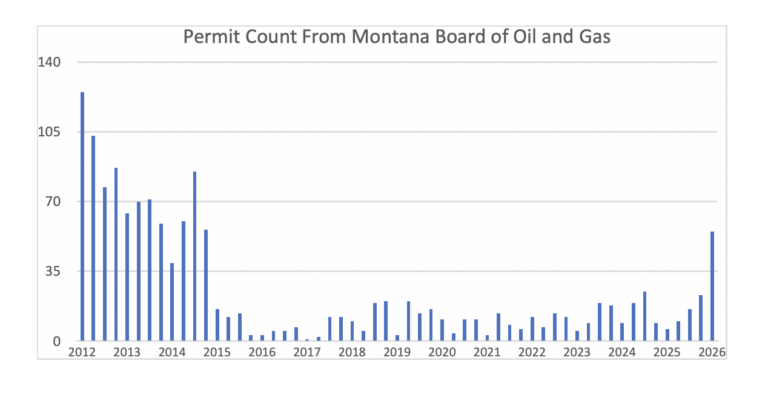
Not all Montanans are harmed, though, as Montana is an oil-production state as well. Overall, Montana ranked 11th in the nation in crude oil production in 2025, although Montana’s contribution to overall U.S. output is modest, less than 1% of total U.S. output. Texas is nearly half of U.S. production and Montana lags behind neighboring North Dakota and Wyoming. In 2024, oil and gas extraction made a direct contribution of $576 million to the state’s GDP, about 0.7% of the $78.4 billion total. In 2013-14 during the Bakken boom, oil and gas extraction was nearly 2% of state GDP, roughly 2.5 times current levels. Rising oil prices have the potential to spur Montana production to higher levels. As shown in the graph below, new permits for oil production surged in the 1st quarter of 2024 to the highest level since 2014. It’s too early to tell if there will be a sustained increase in oil production in Montana, but it has the potential to at least partially offset the considerable pain higher fuel prices are causing for the state’s economy.