By Joel Schumacher
Revenues from Montana agriculture are historically roughly split between livestock and crops sales. Livestock and crop markets had very different storylines in 2025.
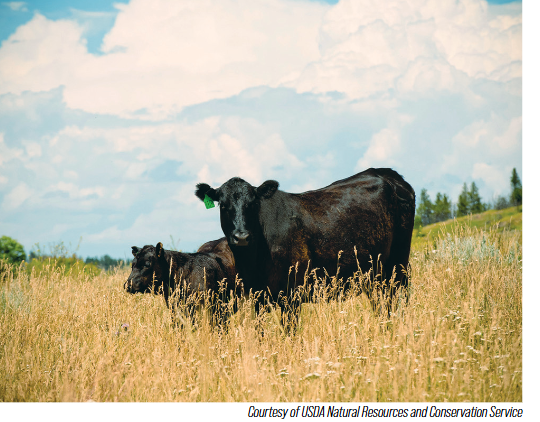
Montana producers were able to secure the highest prices in decades for the 2025 calf crop. There are number of supply side factors that contributed to the high prices. Both U.S. and Montana cattle inventory numbers are at historically low levels, which limits the supply of slaughter-ready cattle. Rebuilding the cattle herd will likely be slow due to reproductive limitations of cattle (one calf per year) and the financial incentives (created by high prices) for ranchers to sell female calves to feedlots and not retain them to increase their breeding herds. Imports of live cattle were down roughly 50% for the first seven months of 2025. This decline is due to impacts of animal safety protocols put in place to prevent the spread of the New World Screw Worm (which has been detected in some Mexican cattle) to U.S. cattle and U.S. trade policy changes.
Feedlots are responding to the limited availability of cattle by keeping them in feedlots longer and thus increasing carcass weights. Imports of beef are up 23% through July. Beef imports are often lean trimmings, which are blended with fatter cuts of U.S. beef to supply ground beef with the fat content that American consumers are accustomed to purchasing. Uncertainty around tariffs, quotas, and animal health protocols have created volatility in markets.
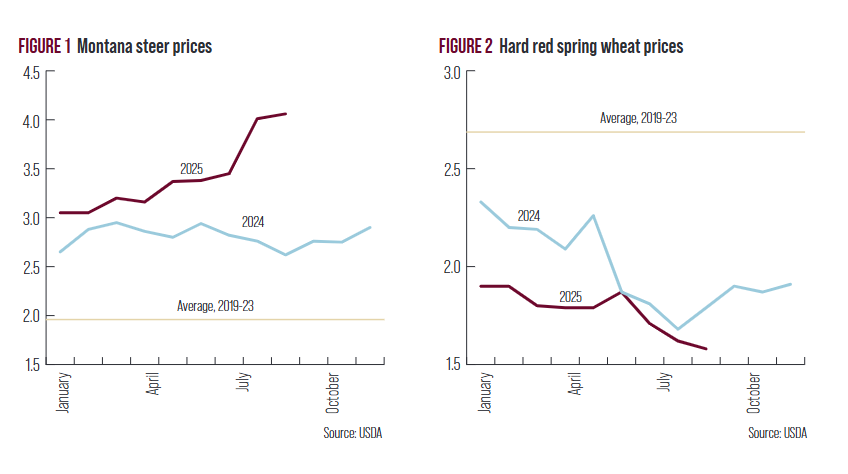
Montana’s primary crops (wheat, barley, and pulses) did not enjoy the same strong prices as in the cattle markets. Global wheat production has been strong, putting downward pressure on prices. In Montana, wheat production increased by approximately 4.5% over 2024. Rain at or near harvest time reduced the quality of crops in parts of Montana, thus reduced their value. Changes in U.S. trade policy have created uncertainty and increased barriers to international markets. Input costs for farmers, which rose over the past few years, have remained at elevated levels. Estimates of the cost of producing many of these crops suggest that the final crop was worth less than the cost of producing it. Some farmers use futures markets to lock in prices for a portion of their crops in advance of harvest, others will sell their crops near harvest time, and others still will store grain for months or even years before marketing their crops. The prices realized by farmers for their crop can vary depending on their marketing strategy. Regardless of their marketing strategy, it was a challenging year financially for many crop producers in 2025.
“Legislation will be needed to clarify farm policy
for 2026 and beyond.“
Looking ahead
Looking forward, agricultural policies are determined by the farm bill, which is a piece of federal legislation that funds and provides direction for the next five years. In a break from tradition, some components of the farm bill were included in the July budget bill while others were not addressed. A separate piece of legislation or an extension of the current legislation will be needed to clarify farm policy for 2026 and beyond.
Joel Schumacher is an associate extension specialist in the Department of Agricultural Economics and Economics at Montana State University.